
Introduction to Jewellery Findings
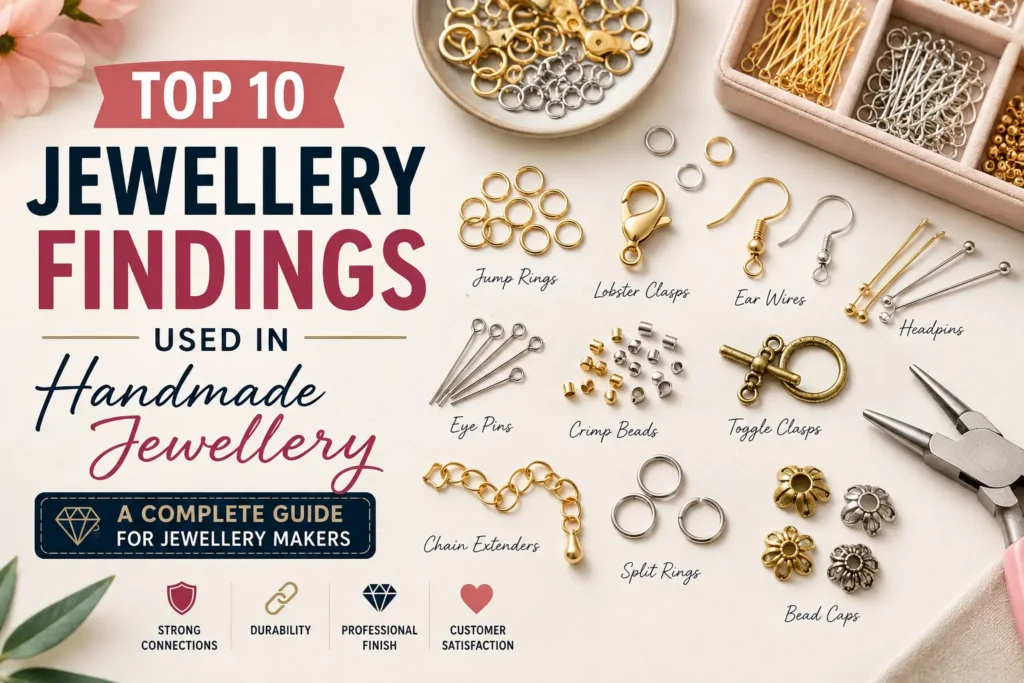
The handmade jewellery industry has experienced tremendous growth in recent years. Customers today are looking for unique, handcrafted pieces that offer both style and durability. While most people focus on gemstones, beads, pearls, and charms, experienced jewellery makers understand that the true foundation of a well-crafted piece lies in the quality of its jewellery findings. Explore jewellery making tools.
Whether you’re creating elegant necklaces, statement earrings, charm bracelets, or pearl jewellery, findings play a crucial role in ensuring functionality, strength, and a professional finish. Without the right findings, even the most beautiful design can fail due to weak connections, broken closures, or poor durability.
Many beginner jewellery makers face common challenges such as necklaces breaking unexpectedly, earrings becoming detached, or customers complaining about poor product longevity. In most cases, these issues stem from choosing the wrong findings or using them incorrectly.
This comprehensive guide explores the top 10 jewellery findings used in handmade jewellery, helping beginners and professionals understand their importance, applications, and best practices. Learn more about jewellery findings.
What Are Jewellery Findings?
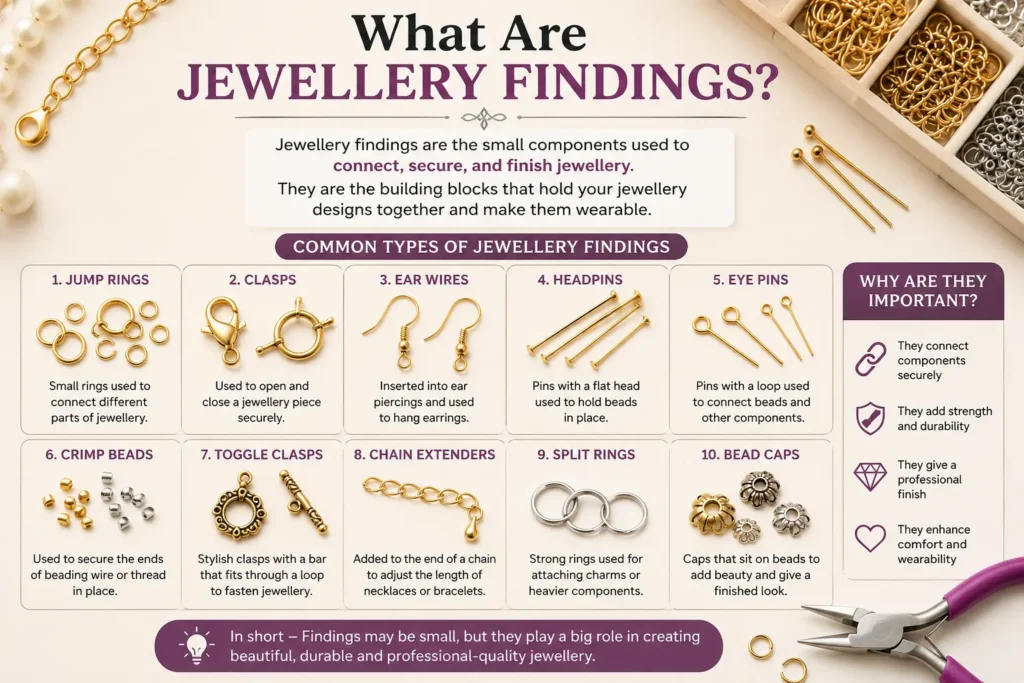
Jewellery findings are the small yet essential components used to assemble, connect, secure, and finish jewellery pieces. They are often hidden within the design, but they serve important structural and functional purposes.
These components help transform loose beads, gemstones, chains, and decorative elements into wearable jewellery.
Common jewellery findings include:
- Jump rings
- Clasps
- Ear wires
- Crimp beads
- Headpins
- Eye pins
- Chain extenders
- Split rings
- Bead caps
Professional jewellery makers consider findings just as important as the decorative materials used in the design. High-quality findings contribute to durability, comfort, and overall customer satisfaction.
Why Choosing the Right Jewellery Findings Matters
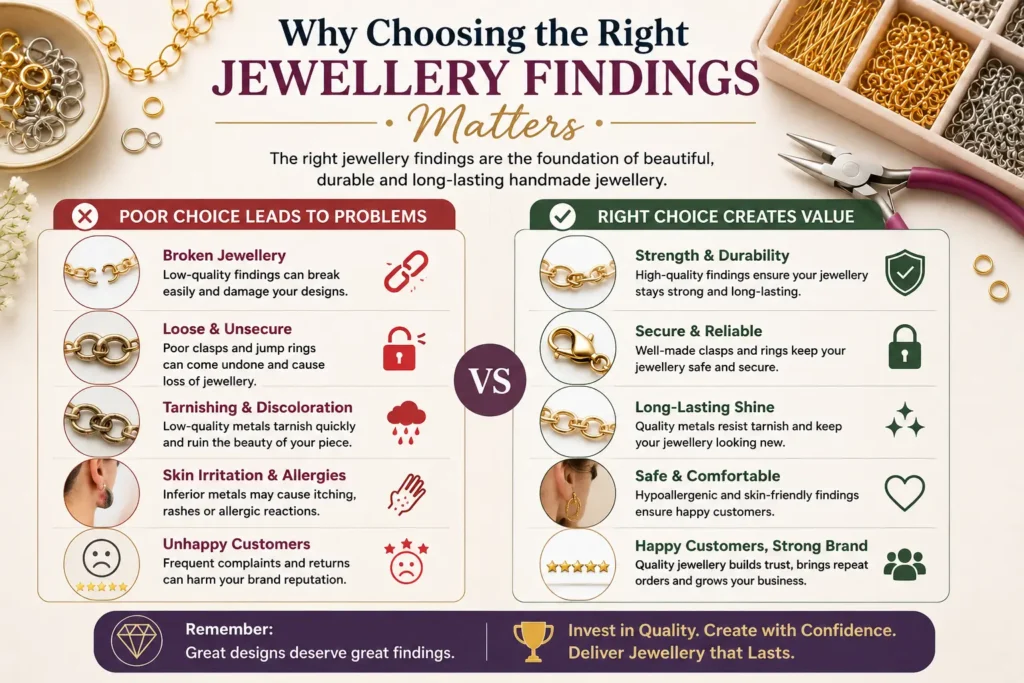
One of the biggest pain points for handmade jewellery businesses is product failure after purchase. Customers expect jewellery to withstand regular use without breaking.
Poor-quality findings often result in:
- Broken necklaces
- Loose pendants
- Lost earrings
- Weak bracelet connections
- Tarnished metal components
- Frequent repair requests
Choosing quality jewellery components helps eliminate these issues while improving product value.
Benefits of High-Quality Findings
- Increased durability
- Better customer reviews
- Enhanced brand reputation
- Reduced product returns
- Professional appearance
- Longer lifespan of jewellery pieces
Investing in premium findings may slightly increase production costs, but it often leads to higher customer trust and repeat purchases.
Top 10 Jewellery Findings Used In Handmade Jewellery
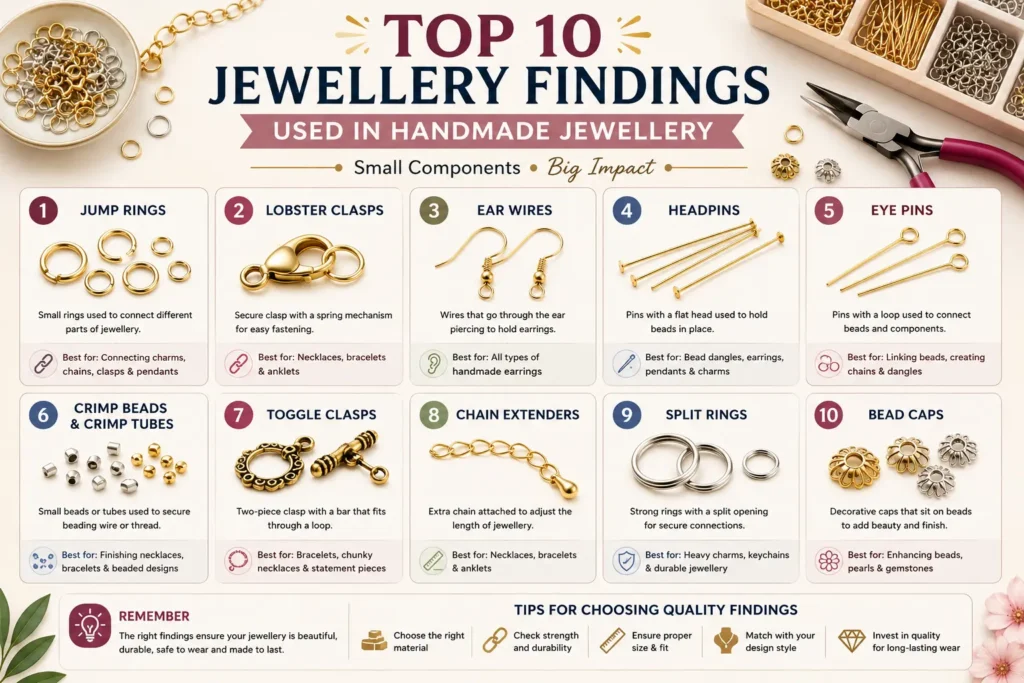
1. Jump Rings
Jump rings are among the most commonly used jewellery findings in handmade jewellery making.
These small circular metal rings act as connectors between various components. They are available in different diameters, gauges, and metal finishes.
Types of Jump Rings
Open Jump Rings
- Feature a small opening
- Easy to attach and remove
- Widely used in jewellery assembly
Closed Jump Rings
- Completely sealed
- Provide greater strength
- Ideal for heavier designs
Common Uses
- Connecting clasps
- Attaching charms
- Linking chain sections
- Joining decorative elements
- Creating chainmail jewellery
Using the correct jump ring size significantly improves the strength and appearance of the finished design.
2. Lobster Clasps
Lobster clasps are considered one of the most secure jewellery closures available today.
Named after their resemblance to a lobster claw, these clasps use a spring-loaded mechanism that allows them to open and close smoothly.
Why Jewellery Makers Prefer Lobster Clasps
- Reliable closure system
- Easy to use
- Strong and durable
- Suitable for daily wear
- Available in multiple sizes
Best Applications
- Necklaces
- Bracelets
- Anklets
- Layered jewellery
For jewellery businesses, lobster clasps help reduce the risk of customers losing valuable pieces due to accidental opening.
3. Ear Wires
Ear wires are essential findings used in handmade earrings.
They pass through the ear piercing and support the decorative portion of the earring.
Since ear wires come into direct contact with the skin, material quality becomes especially important.
Popular Types of Ear Wires
French Hooks
Simple and elegant, suitable for lightweight earrings.
Lever-Back Ear Wires
Feature a locking mechanism for added security.
Kidney Ear Wires
Offer a complete closure design that prevents accidental loss.
Fishhook Ear Wires
Among the most commonly used options for handmade earrings.
Material Considerations
For sensitive ears, jewellery makers often choose:
- Sterling silver
- Surgical stainless steel
- Gold-filled metal
- Hypoallergenic alloys
Selecting high-quality ear wires enhances comfort and customer satisfaction.
4. Headpins
Headpins are thin metal wires with a flat or decorative head at one end.
They are widely used for creating bead dangles and decorative drops.
The head prevents beads from slipping off the wire while allowing jewellery makers to create loops at the opposite end.
Applications of Headpins
- Earrings
- Pendant drops
- Charm attachments
- Necklace embellishments
- Bracelet accents
Why They’re Important
Headpins provide flexibility and creative freedom, allowing artisans to design custom components rather than relying solely on pre-made connectors.
5. Eye Pins
Eye pins are similar to headpins but feature a loop at one end instead of a flat head.
This loop allows components to connect directly with other jewellery findings.
Advantages of Eye Pins
- Create bead links
- Build chain sections
- Connect multiple decorative elements
- Add movement to jewellery designs
Eye pins are frequently used in layered necklaces, chandelier earrings, and gemstone jewellery.
For handmade jewellery makers, they offer an effective way to create custom chains and connectors.
6. Crimp Beads and Crimp Tubes
Crimp beads may appear insignificant, but they are among the most important jewellery findings for stringing projects.
These tiny metal components secure jewellery wire by compressing around it using crimping pliers.
Common Challenge
Many beginners experience broken necklaces because they fail to crimp properly or use low-quality crimps.
Benefits of Crimp Beads
- Secure stringing wire
- Prevent bead movement
- Improve durability
- Create clean finishes
- Reduce product failure
Proper crimping techniques can significantly extend the life of handmade necklaces and bracelets.
7. Toggle Clasps
Toggle clasps combine functionality and decorative appeal.
They consist of two parts:
- A circular loop
- A straight bar
The bar passes through the loop and remains secure through tension.
Why Jewellery Artists Love Toggle Clasps
Unlike traditional closures, toggle clasps often become part of the overall design.
Ideal Uses
- Chunky bracelets
- Artisan necklaces
- Statement jewellery
- Handmade gemstone pieces
Decorative toggle clasps can enhance both aesthetics and functionality.
8. Chain Extenders
One common challenge faced by jewellery sellers is accommodating different customer sizing preferences.
A necklace that fits one customer perfectly may feel too short for another.
Chain extenders solve this problem by allowing adjustable length options.
Benefits of Chain Extenders
- Increased flexibility
- Better customer experience
- Improved wearability
- Reduced return requests
- Greater styling versatility
Chain extenders are especially useful for layered necklaces, bracelets, and anklets.
Customers appreciate the ability to customize jewellery length according to their outfit and personal style.
9. Split Rings
Split rings resemble miniature key rings and provide stronger connections than traditional jump rings.
Because components must be threaded onto them rather than slipped through an opening, they are far less likely to separate accidentally.
Best Uses
- Heavy pendants
- Charm bracelets
- Keychain jewellery
- Permanent attachments
- High-stress connection points
Why Use Split Rings?
When security is a priority, split rings often outperform standard jump rings.
Many professional jewellery makers use them in designs that require maximum durability.
10. Bead Caps
Although bead caps are often viewed as decorative elements, they are also considered important jewellery findings.
These small metal components sit around beads to enhance their appearance and provide visual structure.
Benefits of Bead Caps
- Add elegance
- Create luxury appeal
- Highlight focal beads
- Improve design balance
- Add texture and detail
Popular Applications
- Pearl jewellery
- Gemstone necklaces
- Vintage-inspired designs
- Bridal jewellery
Bead caps can transform simple beads into sophisticated centrepieces.
How to Choose the Best Jewellery Findings
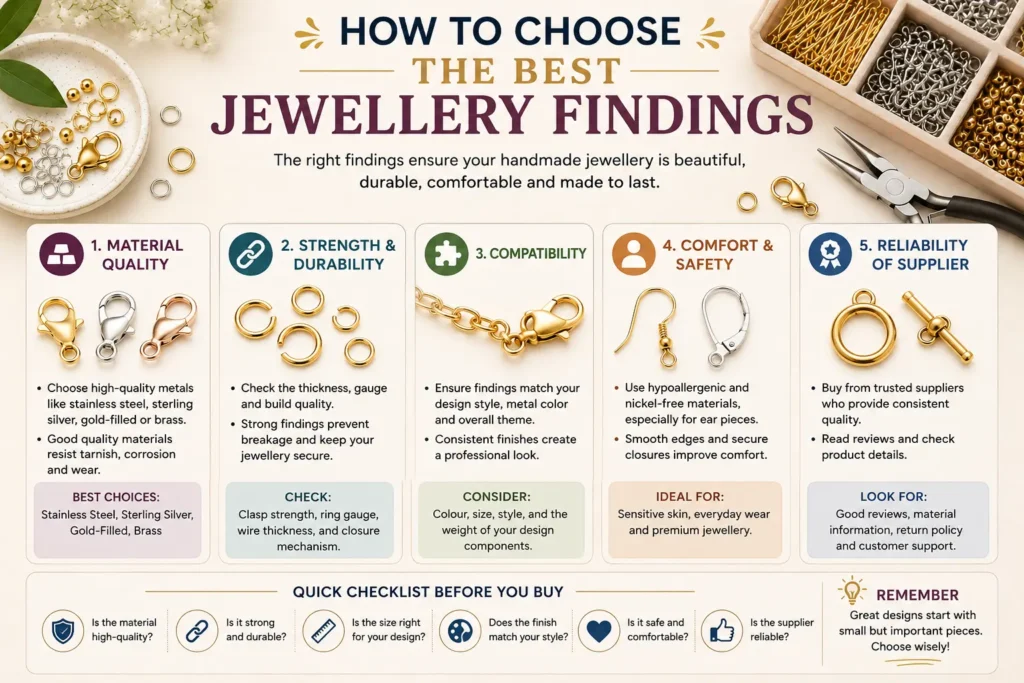
Selecting findings involves more than choosing a matching colour.
Professional jewellery makers evaluate several factors before making a purchase.
Material Quality
The material directly impacts durability and resistance to tarnishing.
Popular options include:
- Stainless steel
- Sterling silver
- Gold-filled metal
- Brass
- Copper
- Titanium
For premium handmade jewellery, stainless steel and sterling silver are often preferred.
Strength and Durability
Consider:
- Wire thickness
- Ring gauge
- Clasp mechanism
- Metal hardness
Weak findings can compromise the entire jewellery piece.
Design Compatibility
Choose findings that complement:
- Jewellery style
- Metal colour
- Design theme
- Target audience
Consistency in finish creates a polished and professional appearance.
Common Mistakes Jewellery Makers Should Avoid
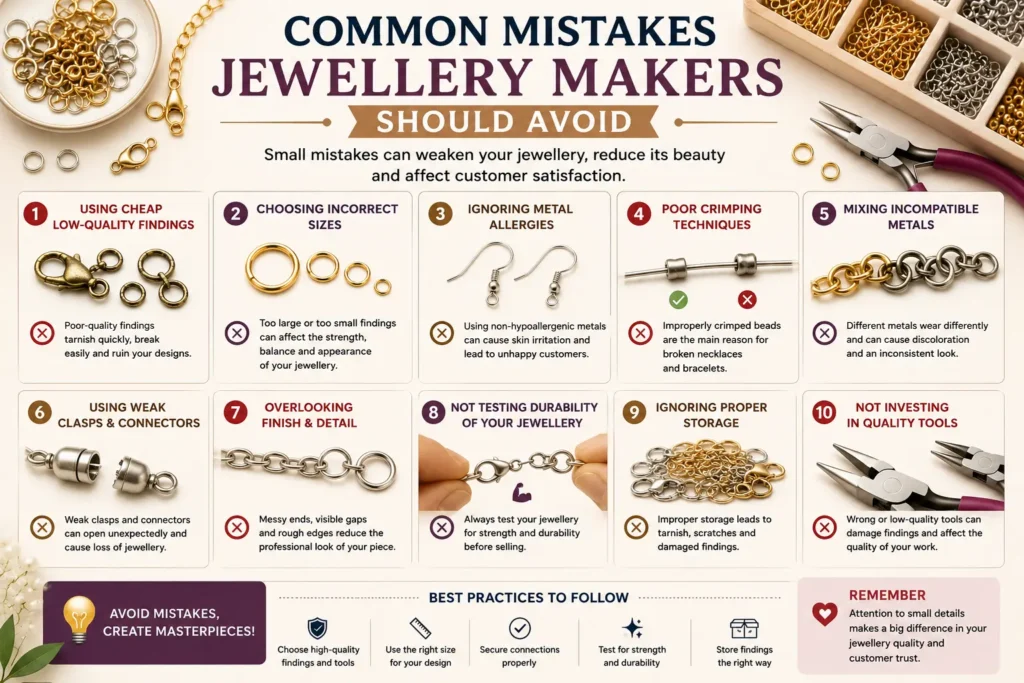
Even talented jewellery artists sometimes overlook finding quality.
Avoid these common mistakes:
1.Using Cheap Findings
Low-cost findings may tarnish quickly or break under pressure.
2.Choosing Incorrect Sizes
Oversized or undersized findings can negatively affect both aesthetics and functionality.
3.Ignoring Metal Allergies
Customers with sensitive skin may react to certain metals.
4.Poor Crimping Techniques
Improperly secured crimps are one of the leading causes of jewellery failure.
5.Mixing Incompatible Metals
Different metals can wear differently over time, creating an inconsistent appearance.
Avoiding these mistakes helps maintain product quality and customer trust.
Future Trends in Jewellery Findings
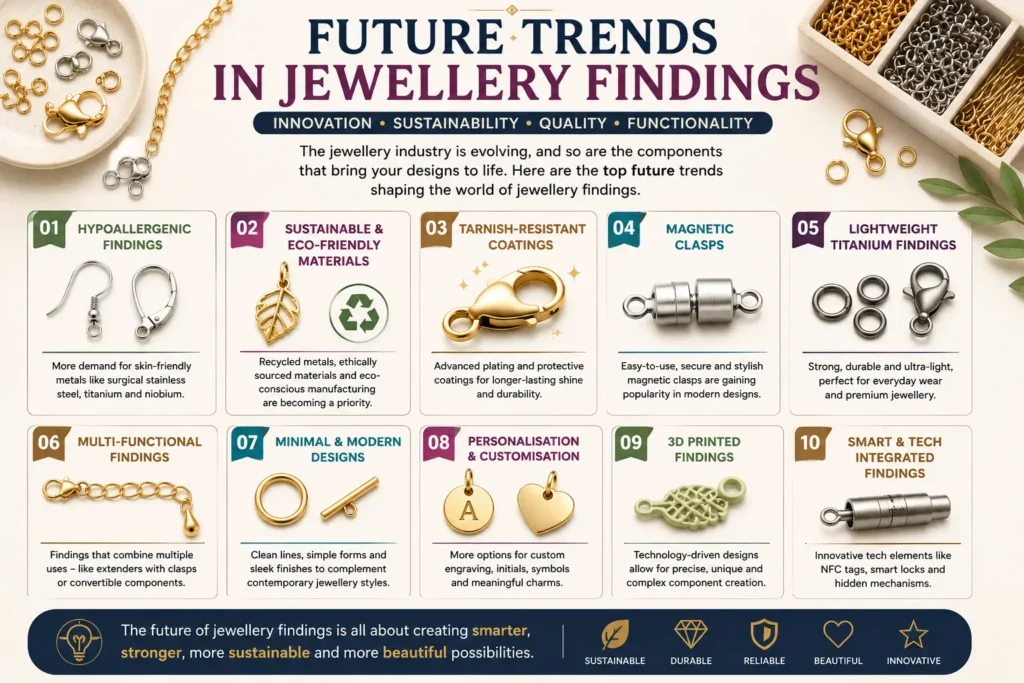
As handmade jewellery continues to evolve, findings are becoming more innovative.
Emerging trends include:
- Hypoallergenic findings
- Sustainable metal components
- Tarnish-resistant coatings
- Magnetic clasps
- Lightweight titanium findings
- Eco-friendly jewellery supplies
Customers increasingly value durability, sustainability, and comfort, encouraging manufacturers to improve jewellery components continually.
Final Thoughts
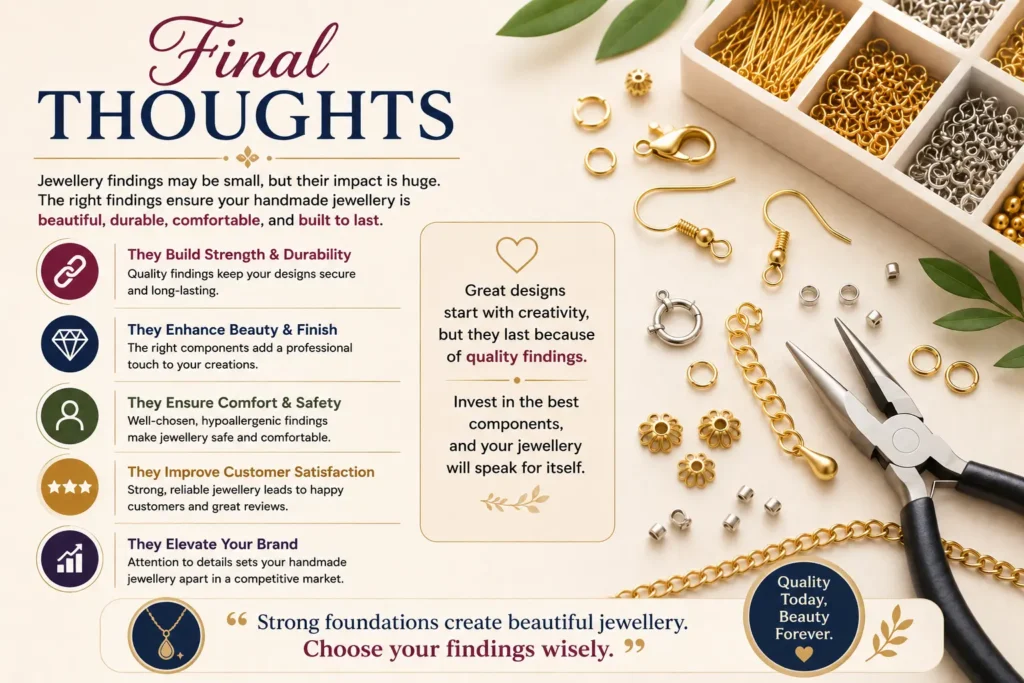
Understanding jewellery findings is essential for anyone serious about handmade jewellery making. While beads, gemstones, and charms often receive the most attention, it is the findings that provide structure, security, and functionality.
From jump rings and clasps to eye pins and bead caps, each component serves a unique purpose in creating jewellery that is both beautiful and durable.
Whether you’re a beginner learning the basics or a professional jewellery maker seeking higher-quality designs, investing in premium findings can dramatically improve the longevity and overall value of your creations.
The strongest handmade jewellery always starts with the right foundation—and that foundation is built with quality jewellery findings.
Frequently Asked Questions (FAQs)
1.What are jewellery findings?
Jewellery findings are components used to connect, secure, and finish jewellery pieces. Examples include clasps, jump rings, ear wires, headpins, and crimp beads.
2.Which jewellery findings are essential for beginners?
Beginners typically start with jump rings, lobster clasps, ear wires, headpins, eye pins, and crimp beads.
3.What material is best for jewellery findings?
Stainless steel, sterling silver, titanium, and gold-filled metals are among the most durable and popular choices.
4.Why do jewellery findings matter?
They determine the strength, functionality, durability, and professional appearance of handmade jewellery.
5.How can I prevent jewellery findings from tarnishing?
Store jewellery in dry conditions, use anti-tarnish storage solutions, and choose high-quality metals with protective coatings.